April 7, 2026 at 5:30 a.m.
Tiffany takes rival to task on tax on tips, overtime
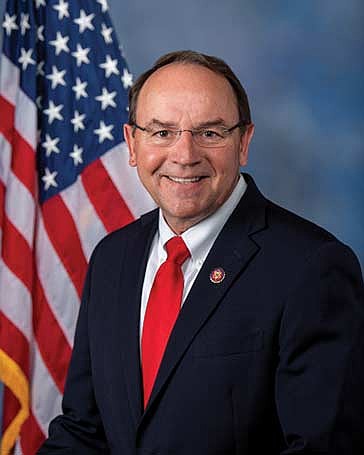
With legislation to eliminate state income taxes on tips and on some overtime now sitting on Gov. Tony Evers’s desk, the issue has emerged as a flashpoint in the state’s 2026 governor’s race, pitting presumptive Republican nominee Tom Tiffany against one of the leading Democratic candidates, state Rep. Francesca Hong, and leaving Evers sitting in the political crosshairs.
The proposals, a bill to exempt certain overtime earnings from the state income tax and another to eliminate income taxes on cash tips, have already cleared the legislature with bipartisan support and now await executive action.
Tiffany supports both measures; Hong, however, voted against the income tax subtraction for overtime and did not vote on the measure about tips. That has given Tiffany a political opening, and last week he used the issue to draw a sharp contrast with his opponent.
“Madison has taken far too much from working people for far too long,” Tiffany said during a campaign stop with Wausau-area business leaders. “Whether you’re a food server, bartender, nurse, firefighter, machine operator, or construction worker, you should keep more of your paycheck, and as governor, I will make sure of that.”
At the press conference, Tiffany observed that Republican efforts at the federal level — including a permanent child tax credit and efforts to eliminate taxes on tips, overtime, and Social Security — had led to significant tax reductions for many Wisconsin residents, in some cases doubling tax refunds.
But Hong wants to go in the opposite direction, Tiffany warned.
“Unfortunately, the Democrat frontrunner for governor, Francesca Hong, thinks you should be taxed more,” he said. “She joined many Democrats in voting against eliminating taxes on overtime in the state Legislature.”
The Senate passed the overtime and tips bills by identical 21-12 votes. The Assembly vote on the income tax subtraction for overtime was 61-35. That chamber voted 60-31 in favor of an income tax exemption for cash tips.
Bills target tips, overtime earnings
The two measures take different approaches but share a common goal: allowing workers to retain more of their earnings without increasing employers’ direct costs.
According to state Sen. Rob Hutton (R-Brookfield), the overtime legislation doesn’t exempt all overtime earnings from income taxes, only the extra “half” when someone works more than 40 hours a week and earns time-and-a-half pay. Hutton also says the bill is written to conform to the Internal Revenue Code (IRC) as recently amended by incorporating IRC definitions in effect for federal purposes, minimizing conflicts between the state and federal tax codes.
The bill includes a cap of $12,500 per tax year ($25,000 for joint filers) and a phase-out for claimants whose adjusted gross income increases from $150,000 to $275,000 ($300,000 to $550,000 for joint filers), Hutton says, ensuring that the bill’s tax relief is targeted to middle-income workers and those professions most likely to rely on overtime.
“Across manufacturing, health care, public safety, logistics, hospitality, and other Wisconsin industries, employers rely on overtime to fill shifts and meet demand,” Hutton said. “Employees rely on those extra earnings to make ends meet for their families. Both are increasingly true as demographic trends put greater pressures on our workforce and economic trends put greater pressures on family bank balances.”
When Wisconsinites step up to cover extra shifts and keep communities running, the tax code shouldn’t punish that effort, Hutton said, calling the measure a practical step to ensure that hard-working Wisconsinites keep more of what they earn at a time when their families need that money much more than the government does.
“It ensures their sacrifice of personal and family time is not unduly punished by our tax code, supports staffing needs, and honors our state’s traditions of hard work and sacrifice,” he said.
Meanwhile, the other bill would exempt cash tips from state income taxation altogether, a move supporters say would benefit workers in hospitality, tourism, and service industries.
“Tipped workers are a vital part of Wisconsin’s economy, especially in the hospitality, restaurant, and tourism industries that help define our state’s culture and support our communities,” Rep. Ron Tusler (R-Harrison) said. “These employees include high school students getting their first work experience, college students working their way through school, and single parents stretching every dollar to support their families.”
This legislation gives those workers a raise, Tusler said, not by increasing costs for businesses or expanding government, but by simply letting workers keep more of the money they already earned.
“That means more money in their pockets for groceries, rent, or gas,” he said. “Importantly, this bill doesn’t impact employers or interfere with existing federal tip tax credits. It only changes how individual workers file their state taxes. Businesses can continue to operate as they do now, while gaining an edge in hiring by offering prospective employees the chance to take home more of their tips.”
Business organizations have lined up in support of both measures, arguing they could help address persistent labor shortages and improve worker retention.
In testimony before lawmakers, Evan Umpir, general counsel for Wisconsin Manufacturers & Commerce (WMC), said exempting overtime would make Wisconsin more competitive by rewarding hard work, increasing simplicity between the state and federal tax code, and helping the skilled workforce gap for employers.
“Wisconsin continues to face a significant skilled labor shortage, particularly in construction and manufacturing,” Umpir said. “… Allowing employees to work overtime tax-free helps employers meet demand and utilize experienced workers while also providing tax relief for extra hours worked.”
Umpir also pointed to Wisconsin’s labor force participation rate — 64.5 percent as of September 2025 — as evidence of ongoing workforce constraints.
Similarly, the Wisconsin Restaurant Association (WRA) emphasized the importance of tip income in the state’s eating and drinking establishments, which employ more than 216,000 workers.
“Eliminating income taxes on tips would put cash back in the pocket of a significant number of workers in the restaurant and hospitality industry and could help restaurant operators recruit the industry workforce,” WRA executive vice president Susan Quam said in testimony.
Quam cited industry data showing that tipped employees nationally earn an average of $27 per hour, with some Wisconsin servers earning significantly more during busy evenings. However, the majority of tipped employees are part-time or seasonal, making the tax break more important.
Both proposals are also tied to broader national discussions around the tax treatment of tips and overtime pay.
For the moment, the bills’ immediate future depend on Evers. If he signs them, Wisconsin would join a small but growing number of states moving to exempt tip income from taxation and provide tax relief on overtime earnings.
If vetoed, the issues are likely to intensify in the governor’s race, with Tiffany already pledging to enact the policies if elected.
Richard Moore is the author of “Dark State” and may be reached at richardd3d.substack.com.
Comments:
You must login to comment.