March 6, 2026 at 5:55 a.m.
New TID proposed for North Stevens St. area
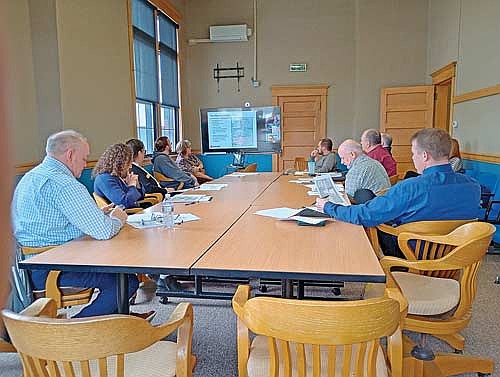
Rhinelander’s latest Tax Incremental District, TID 13, took its first steps toward becoming a reality Tuesday morning with the convening of the Joint Review Board.
The proposed district includes 25 contiguous parcels in the North Stevens Street area.
“Over time we’re going to need the community to grow and enhance the tax base, and tax increment financing is ... really one of the only tools available in Wisconsin that is dedicated solely towards economic development.”
Josh Low, Ehlers Public Finance Advisors
Gathered in the Council chambers to hear a presentation by Josh Low of Ehlers Public Finance Advisors were Rhinelander mayor Kris Hanus, Megan Gerber for Nicolet College, Rhinelander clerk/treasurer Wendi Bixby, Robert Thom of the School District of Rhinelander, citizen appointee Brandon Karaba, Oneida County board chairman Scott Holewinski, Tony Pharo of the Oneida County Economic Development Corporation, Rhinelander city administrator Patrick Reagan, Rhinelander city clerk Austyn Zarda, and IT coordinator Tara Tessmann. Low and Tom Jarow attended remotely.
After Hanus was voted the committee’s chairperson, and Karaba was approved by the committee, Low detailed the economic aspects of the prospective TID 13. He explained Tax Increment Financing captures tax revenue from new construction to create a funding source for incentives and infrastructure for redevelopment.
“Really the whole point of this is figuring out how we can find funding for necessary incentives and infrastructure to develop a site,” he said. “Over time we’re going to need the community to grow and enhance the tax base, and tax increment financing is really a critical tool, really one of the only tools available in Wisconsin that is dedicated solely towards economic development.”
Low told the board Ehlers found two main things have been stopping developers looking to build projects in recent years.
“One, the interest rate has dramatically increased the cost of borrowing from developers,” he said, “Two, the cost of materials has made the project costs actually more expensive.
“So as those two things have gone up in the last five years, what we’ve found is that more projects need additional municipal assistance to become feasible.”
If approved, TID 13 would be a mixed-use district, he said, with new residential development along with light industrial and commercial. The life of the district will be 20 years.
Costs of $3.2 million in development incentives and $1.5 million in utility infrastructure are proposed in four phases over the 20-year life of the district.
Low pointed out that all projects in the district are still subject to approval by the Rhinelander Common Council at the time of implementation.
Construction of a multi-family residential project valued at about $9.1 million, leading total new construction of approximately $15 million, is part of Ehler’s development assumptions and revenue forecast for TID13.
Hanus verified a developer is proposing a residential project, with Pharo adding, “as we build the capital stack with this project it’s at $29 million.”
An amendment for Rhinelander’s already-existing TID 10 was also discussed, to allow one more project there.
Both TID 10 and the proposed TID 13 were addressed at the Rhinelander Plan Commission’s public hearings held later that day.
If approved, a resolution recommending approval of the TID 13 project plan would be considered by the Rhinelander Common Council at its March 23 meeting.
Ardith Carlton may be reached at [email protected].


Comments:
You must login to comment.