September 10, 2024 at 5:50 a.m.
Wages, labor, insurance and gas among several factors impacting food prices
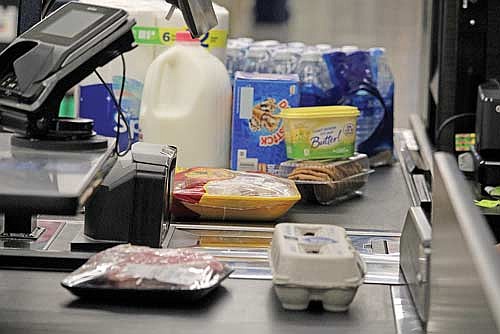
Whether its while shopping at the grocery store or eating at restaurants, many are feeling the pain of rising food costs.
Skyrocketing food prices have been a hot topic of conversation for the last few years and they may never come back down. Fortunately, increases in food costs appear to be slowing down this year, but the United States Department of Agriculture (USDA) is still predicting steady — yet much more bearable — increases in 2024.
A Food Price Outlook report released by the USDA in June, highlighted that nationally in 2024, all food prices are predicted to increase by 2.2 percent — a significant deceleration compared to recent years. According to the USDA report, “Prices are predicted to increase in 2024 for 13 food-at-home (grocery) categories,” and decrease in two.
Among the items the USDA expects to increase — as of June 25, the release of the report — are pork by 1.1 percent, eggs by 0.1 percent, non-alcoholic beverages by 2.5 percent, sugar and sweets by 3.8 percent and fresh vegetables by 1 percent, among others.
On Aug. 22, The Lakeland Times sat down with a number of food cost experts to get information on the supply chain process.
The Times has decided not to identify any of those individuals due to their work in the community.
Wages, labor and other expenses
The cost of labor among others has hit the entire supply chain. At each level from the farm to the retailer, increased wages have spiked operational expenses.
A truck driver shortage in the U.S. has had implications across the supply chain, driving up the price to haul product.
Bigger buyers such as Walmart can leverage their size and volume to order truckloads of product directly from the manufacturer. Whereas smaller players have to buy the product from a warehouse that purchases from a manufacturer. The middle-man warehouse is unable to sell the products at “truckload” price because they have to make up for the labor and transportation expenses and show return.
On top of that, record-high insurance prices and energy (fuel) costs have piled on to operational costs along the supply chain as well.
To make matters worse, simple expenses that may not even cross the consumers’ mind have burdened retailers, such as credit card fees.
Credit card companies have seen major increases in profit margin in recent years as a result of credit card fees charged to the retailers cost. In today’s economy, 80-90 percent of transactions at a grocery store happen with a credit card.
Until the price of insurance, wages and other operational costs for retailers goes down, food prices will remain high.
What is important to remember is that these expenses don’t only affect the retailers. Packers and manufacturers are paying increased insurance, oil, diesel and other expenses which all funnels down to the price of products on the shelf.
Energy
The supply chain can be viewed as having a funnel effect. From the grower to the shelf, everyone involved needs to have a return in order to stay in business. Just one small factor such as energy can cause a major shift in the chain and create price increases.
The transition to less polluting, lower-sulfur diesel fuels in the U.S. has increased the production and distribution costs of diesel, which has resulted in the consumer value to increase 25-30 percent since 2020.
From the time a product is a seed to the time it is served to a table there are several steps taken to prepare the item, several of which utilize diesel fuel.
The farmer has the seed delivered typically with a diesel truck. The field is prepared typically with a diesel tractor. Then the field is tended to during the seed’s growth and eventually harvested using diesel fueled equipment. After it’s harvested it is taken to a distribution plant, purchased by a grocer and transported to their store all using diesel trucks, tractors and other equipment.
When all is said and done, each entity involved in the complex chain to get a product on the shelf then needs to recover the cost of the energy by raising the operational cost of each step along the supply chain.
Recovering from 2020-2023 food-price surge
According to the USDA report, in 2022 food prices increased by 9.9 percent — faster than any year since 1979. Food prices rose partly due to a highly pathogenic avian influenza (HPAI) outbreak that affected egg and poultry prices, along with the conflict in Ukraine which compounded other economy-wide inflationary pressures such as rising fuel prices, per the report.
The 9.9 percent increase in 2022 piled onto increases of 3.4 and 3.9 percent in 2020 and 2021 respectively, during the COVID-19 pandemic, amidst an already reeling economy.
In 2023, food prices continued to exceed increase expectations furthering an already out-of-control trajectory. All food experienced a 5.8 percent increase in 2023 bringing the total four-year increase between 2020 and 2023 to a whopping 23 percent. More than the total food-price increase from 2009-2019.
This year the USDA is expecting the annual increase in food prices to slow considerably, with an estimated 2.2 percent increase on all food, a mark within 0.2 percent of the average from the last 20 years and much easier for consumers to stomach.
Unfortunately though, food-buyers can’t get comfortable just yet due to lingering outbreaks of HPAI maintaining uncertainty in the market.
“An outbreak of HPAI that began in 2022 contributed to elevated egg prices by reducing the U.S. egg-layer flock,” USDA said in its report.
The report stated that after egg prices peaked in January 2023, they declined or stabilized through much of the year.
But in yet another bout of bad luck for food costs, prices increased again in recent months after HPAI was confirmed in egg-layers in November 2023 — the first time since December 2022.
The USDA said price impacts of the outbreak are currently being monitored closely. In the meantime, eggs remain as the most volatile food price category, meaning prices and predictions are likely to fluctuate substantially moving forward with the potential to affect other categories such as poultry.
Otherwise, barring major fluctuation, most food categories are projected to return to a normal annual increase this year with all but sugar and sweets, and beef and veal estimated to increase by a margin less than 3 percent.
Beef, pork and chicken
Pork and chicken markets can react very quickly to what is going on around them, which has helped the price of those items stay relatively the same. A mother pig can produce up to 10 piglets, which are sent to slaughter in less than a year. Chickens can lay an egg a day and are sent to slaughter within a matter of weeks. The same can’t be said for cattle.
Right now the cattle herd is at the lowest it has been since 1951, which is a concern, because it is getting so low that it is hard to meet the demand and replenish the supply.
The problem ranchers are having has to do with uncertainty and regulations that are being put in place regarding water and other key aspects of cattle farming. In addition, there’s a concern among ranchers that a tax on methane gas may be coming due to its effects on the climate. In turn, ranchers are forced to question whether they should invest amid uncertainty about the future.
In addition, humane standards implemented in California have made it hard for ranchers to maintain efficiency due to regulations on the amount of cattle and hogs allowed per square foot of field. This has created affects top to bottom, because if you want to sell or buy cattle from California, you have to meet certain standards.
Because of the tight supply on cattle there has been a significant price increase in beef products.
Certified Angus Beef products have certain policies in place to ensure the quality of the product. Out of 10 cattle only two of them on average will qualify as Certified Angus Beef.
Ground beef has had the biggest increase, because the packers have tried to protect the margins. They are trying to make up the rising price of beef in general through raising ground beef rather than spiking other beef products.
Turkeys
Turkeys being sold at Thanksgiving actually causes a loss for grocery stores.
The wholesaler begins buying frozen turkeys for Thanksgiving in March. The price for retailers increases due to storage costs and other expenses the wholesaler incurs from storing the turkeys each month.
This adds yet another hit to grocers, encouraging them to mark up other items to recover the lost profit.
Salmon and other seafood
A significant increase in salmon and seafood can be attributed to a number of factors.
One being the price of gas — which has affected pretty much every product — has made it more expensive for fishermen to get the fish.
However, the biggest impact on the seafood market is regulation. Fewer vendors are entering the fresh fish market due to the uncertainty associated with seasonal regulations. These regulations can limit the harvesting seasons for certain seafood to anywhere between two and eight weeks, creating caution among buyers.
Although, the USDA report predicts seafood to experience a price decrease by the end of 2024.
Consumers
Consumers are getting more conscious about how much food they’re throwing away, which has created retail strategies such as “shrinkflation.” Since manufacturers don’t want to drive a consumer away from a category, they instead shrink the amount of product allowing them to sell a single package for a lower price. This also helps reduce the “sticker-shock” experienced by consumers.
When retailers attempt to appease a costumer it has many risks involved. Grocers have to be cautious of the tipping point where a consumer may leave a certain product category or the department as a whole.
However, consumers do have the option to manage inflation themselves. If a shopper feels like they are being squeezed and they have a choice between ground beef or steak, chances are they will choose the cheaper ground beef option. When this starts to happen with a product the packers look to see where they can make more money and end up raising prices on ground beef.


Comments:
You must login to comment.