November 21, 2014 at 3:20 p.m.
Participation down nationally in youth sports; Local coaches address the concerns
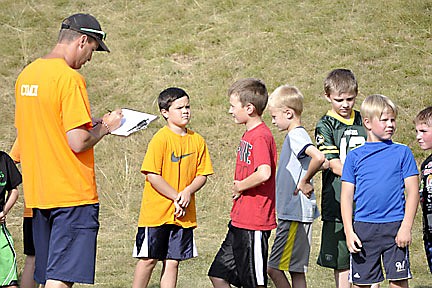
Participation down nationally in youth sports; Local coaches address the concerns
A poll of 1,500 Americans conducted in September, identified injury, cost, competitiveness and quality of coaching as the most concerning factors.
According to the Sports & Fitness Industry Association, participation in team sports among children aged six through 12 dipped from 44.5 percent in 2008 to about 40 percent in 2013. At least lately, that trend has translated to the Northwoods. Mark Steinmetz, an organizer of Rhinelander's wrestling club, said his club has been able to right the ship over the last couple years but still haven't made up for recent losses.
"We've actually remained pretty steady lately," he said. "We haven't declined much at all. We aren't at the peak we once were. I'd say we're down about 20 or 30 participants from our peak which was about 100 wrestlers."
Kim Frederickson, competitive coordinator for the Rhinelander Soccer Club, said its numbers have taken a similar path.
"It's been up and down for us," she said. "Over the last couple years, we've seen an increase in soccer numbers, especially in the younger ages like the U-6, U-8 and U-10. The older ages like the 14s, 16s and 18s have decreased quite a bit."
That comes as no surprise, said Rhinelander native and U.S. Ski Team development coach, Bryan Fish, who was in town earlier this month as a guest speaker for the Northwoods Nordic Ski club.
"We lose most of our kids by the age of 13 in all of sport," Fish said. "From 13 years old we lose, on average, 35 percent of kids in sports every single year until age 18."
Bill Makris has led the Pop Warner program in Rhinelander for almost three decades. He said in his experience, the numbers come in waves.
"In some grades, it's great," he said. "In other grades, it hasn't been that great and the numbers had been down. For example, last year, our sixth graders had 28 and this year we only had 17. Then we have 28 in our fifth grade, but our fourth grade is down to 13. So it depends on the grade. We haven't had that before. Maybe once in awhile it was like that, but it seems like now it happens more than usual. I've talked to the other youth coaches and it seems like it's happening all around. Certain grades aren't participating in youth sports."
The consensus is clear though. Overall, participation is down and according to the poll conducted by ESPN, the contributing factors are fairly clear. However, one of the factors the poll claims is most important to parents today doesn't seem to translate to the Northwoods, at least in the eyes of those who organize youth sports in the area.
A little more than eight of out 10 parents who participated in the ESPN poll said they're concerned about the "quality or behavior" of youth coaches. In addition, 61 percent said it was a "big concern." So far, the quality and character of youth coaches in the Northwoods hasn't been called into question. Both Makris and Steinmetz said coaching isn't an issue at all, and Frederickson said the soccer club is always on the hunt for new coaches.
"We struggle with finding coaches to help us out," she said. "We need skilled players that will come back and help us out, especially with our younger players and rec programs. To have them come out so it's not just players' parents is important."
There were issues raised in the poll that certainly translated to Rhinelander youth sports though. Injures were a huge presence in the poll, and each Rhinelander coach thought the risk of injury raised more red flags than ever before.
"I think the concussion and brain injury issue is much more in the forefront than it was 10 years ago, as far as the concern for sports," Steinmetz said. "The longterm result for some of these NFL players makes players shy away from sports in general."
That doesn't mean coaches aren't determined to reverse that trend though. Frederickson said the key is proper instruction in the early stages of sports.
"When things aren't taught correctly, parents can worry," she said. "There is concern out there about headers not taught correctly and concussions. I think if they're taught correctly, those injury risks go down."
The risk of concussions mentioned in ESPN's poll, and football was by far the sport most connected to the injury, but Makris said, at least for his program, it's been a welcome spotlight on a health risk he sees as preventable. So far, it hasn't been a big deterrent for parents either.
"No one ever says any concerns to me," he said. "We have a very safe program. If a concussion occurs it might be in practice and if it is, it's a mild issue. In 29 years of Pop Warner, we've probably had five or six concussions and it's if a kid falls backwards or something like that. Examples of injuries we see are kids cutting themselves with a filet knife or kids falling off their bikes and getting concussions. It's typical kid stuff. There are no concerns that have been voiced to me.
"Do I think it helps safety with all the concussion publicity that has gone on? Yeah, absolutely. I was interviewed by ESPN when they wrote about 'League of Denial.' I told them even professional football players aren't wearing their helmets right. You should(n't?) be able to take your helmet off like it's a hat with one hand. Peyton Manning wears his correctly because he's got that mark on his head when he takes his off."
Another issue the ESPN poll raised focused on the cost of youth sports. According to the poll, seven out of 10 parents are worried about both the rising costs and time commitment participation in youth sports requires. Steinmetz said that's an issue many local parent are concerned about.
"I think cost does play a role," he said. "We try to remain as low as we can with our costs, but there's a lot that goes into it. It's not just the commitment of the initial payment anymore. It's the travel and the tournament fees too. It's a huge commitment."
Makris said he's worked to keep the cost of Pop Warner football relatively constant throughout his tenure and he doesn't buy into the idea that rising costs are discouraging parents from enlisting their kids in sports.
"Looking at the cellphones the kids have, I don't think cost is a problem," he said. "Our cost has been $100 and it's been that way for the last 15 years. It's very affordable and we do have a scholarship program available too and that's supported by United Way. I don't think cost is problem at all. Maybe one in 500 is effected by cost, but there's a scholarship program so there's no reason that should matter."
According to the ESPN poll though, the decline in youth sports participation can be attributed to a number of factors. The question is what can be done to reverse the trend?
Fish said the key may be to getting back to basics. He said having fun the U.S. Ski Team's secret weapon, a weapon that can be applied to all sports.
"We need to create a training environment, an environment at practice that is really, really fun," he said. "That's how people learn much better and the results will come along. If it's fun and they're improving and they're being challenged, positive things happen."
River News associate editor Jeremy Mayo contributed to this report. Andy Hildebrand may be reached at [email protected].


Comments:
You must login to comment.