February 24, 2014 at 2:08 p.m.
Eshelman to share experience at elephant sanctuary
Eshelman to share experience at elephant sanctuary
By Kayla Thomason-
She had received an email about working with elephants through the Elephant Valley Project and decided to pursue it.
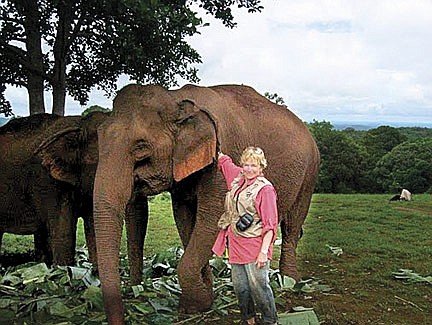
A British charitable organization helped her travel to Cambodia to work with elephants. She spent three weeks in the jungle there with elephants who had been cruelly mistreated.
"One of my jobs was to wash [the elephants] every day," she said. "Elephants require bathing twice a day. Their skin is very sensitive and they are very subject to skin infections so they need to be bathed."
Bathing an animal that is a couple people tall may seem like a difficult task, but with scrub brushes on brooms to suds them up and long hoses to rinse them down, the daily ritual wasn't that challenging, Eshelman said.
Eshelman's other main task was to cultivate banana trees. The trees have a high water content which is important in an area that doesn't have regular electricity. If an elephant goes down in the jungle its the caretakers can keep it hydrated by dragging banana trees over.
"Just three trees a day would be enough to keep the elephant hydrated," Eshelman said.
There were 10 elephants at the sanctuary when Eshelman was there and they had all been abused.
The oldest elephant was a 70-year-old bull named Bob whose owner had pounded on his tusk until it fell out and sawed the other one off so it could be sold.
Another elephant had a square scar on its forehead where someone had carved its flesh out and left an open wound, Eshelman said. This was done because the elephant, a female, was hard to handle and the hooks they used to control her worked well in that spot, according to Eshelman.
"The fact that she will forgive people, and still be friendly to people, just blew me away," Eshelman said. "(It) blew me away that when you think about the horrible things that these animals have been through and how gentle and how kind they are, it's just amazing."
Given the elephants' traumatic past, Eshelman had to be alert to their body language, especially their ears. When an elephant is nervous they will quickly flap their ears back and forth, she said.
Although the elephants seemed to have forgiven humans for the pain they inflicted, and have never harmed a guest, guests were given a bit of advice should an elephant become upset with them, Eshelman explained.
"We were always told that if an elephant got mad at us and started charging us that we should run," she said. "We shouldn't try to hide behind a tree because no tree can hold back an elephant and we probably couldn't outrun one either but in the time that it would take an elephant to catch us the mahouts would be able to get them under control."
Mahouts is the Hindi word for caretaker. Mahouts stay with the elephants while they roam free and follow them to make sure they don't go anywhere they are not authorized to graze, such as farmland. Eshelman said they tug on the elephant's ears to get their attention and guide them back with treats and cane sugar.
Eshelman said she was particularly impressed with the man who started the sanctuary. She said he was about 22 years old when he started the project.
"He told me that he started the camp for the elephants but he wound up staying for the people," she said.
Cambodia is a poor country and the elephant sanctuary employs locals as mahouts and cleaners, provides basic education to the children, and very basic health care. In exchange, elephants are allowed to graze on 20,000 acres of land, according to Eshelman.
"It's not much money but it's enough to resist the Chinese pressure to sell," she said. "So they get to live their traditional lifestyle on their own land and these poor elephants who have had this hellacious life get to live as free as a modern elephant can possibly live in Asia now and the people are doing great."
The Bunong tribe used to have a 50 percent infant mortality rate and since the Elephant Valley Project started the tribe hasn't lost a baby, she noted.
"Just a Western eye who can tell when a child is really sick and needs to go to a major hospital or one who can just deal with basic first aid was enough to save all the babies in that tribe and, I don't know, for a 26-year-old that was quite an accomplishment and something that I was really thrilled with," she said.
"That's just so refreshing, in these days when it seems like you can't accomplish anything without causing somebody else difficulty it just seems like this is a win, win, win proposition."
Elephant Valley Project is always on the lookout for elephants and they try to buy them if they can. If not they go through a very complicated agreement with whomever owns the elephant to "borrow" them.
Eshelman will share more information about her experience working with the Elephant Valley Project Feb. 27 at 7:30 p.m. at the Nicolet Theatre. Admission is free.
For more information on the Elephant Valley Project, visit http://www.elephantvalleyproject.org.
Kayla Breese may be reached at [email protected].


Comments:
You must login to comment.