October 18, 2017 at 4:30 p.m.
City finance director confident no cuts will be needed to proposed 2018 budget
Finance committee wraps up first look at department budget proposals
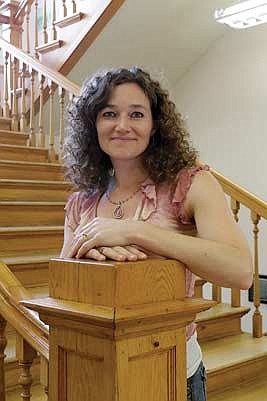
City finance director confident no cuts will be needed to proposed 2018 budget
While the 2018 revenue figures are projected to be down slightly from 2017, Bixby said she is fairly confident there will be enough revenue to cover the expenses laid out in the various departmental budget requests.
While the revenue for next year is budgeted at approximately $10,000 less than what was listed in the 2017 budget, the amount the city is expecting to receive in taxes, fees and other revenue is expected to be higher than what was listed in the 2017 budget.
In 2017, revenue was budgeted at $8,949,675 and the city is projected to receive a total of $8,962,858. Bixby used the figure of $8,939,008 in the 2018 budget for revenue.
If that 2018 number stays where it's at, the committee won't have to make cuts to get the expenses to match revenue, as it did near the end of the budget process last year.
"I worked on that today, but I didn't know if I should bring it up today because it is the budget summary, but so far, it will cover it," Bixby told the committee. "Now I want to do some double-checking just to make sure. I double-checked it once, but I'd like to do it again."
Bixby cautioned that how the revenue and expenses will balance is still preliminary.
"I just have my double-check process to go through and then one more piece to find so I can figure out what the tax rate is," she said. "I want to make sure I have the correct number."
When setting the revenue for the budget, it is always better to be conservative and have it come in higher then the opposite, the group agreed.
"It is better to go low and high rather than go pie in the sky, say 'I think it's going to be a good year so let's add $20,000 to the revenue.' It sounds nice to make the budget work, but not at the end," committee chair Mark Pelletier said.
Interim city administrator Keith Kost told the committee that Bixby has "a pretty good handle on this (the budget) for not being in the finance director's chair that long."
Pelletier had set a goal of a zero increase on taxes for 2018, and he was excited that this might be possible without having to cut department budgets.
Also at the meeting, public works director Tim Kingman presented revised proposed budgets for the water, wastewater and storm water departments to better account for the administrative fee the three departments incur.
"The method that was developed in 2016-17 was to allocate these administrative expenses to all parties involved based on the gross income coming in and the full-time employees that are being served from the previous year," Kingman said. "So we have done that. And when you look at this, the 2016 income expenses drove the values that are in revenue right now. However, there is another little nuance to this that I want to bring up, something that you could mull over for a whole darn year, probably. Or not, you might want to do something about it now."
Kingman then went on to say that one of the fundamental things that goes on with utilities is that money is transferred from department to department.
"It's largely grants or transfers from one department that carries the cash to another," he said.
He pointed out that in 2016 the storm water utility spent $794,915, but that was because a large payment came in from another utility.
"So we are handling money in large transactions," Kingman said, referencing the other budgets. "So, in the case of water it is $2.3 million, but what we are actually physically spending is $1.85 million. It drives a different set of numbers because the gross income is done that way."
He said the various utilities' totals are tracking to be what they have been in the past, if not a little higher.
"They are about 10 percent up from last year. Over time, really we were spending upwards of $250,000 in 2015 when this method was tried," Kingman said. "In 2017 came up with $163,600, which brought us up from 2016 which was too lean."
He said the large cash transfers from the income of one utility to another should not be applied within the public works department budgets and that practice should be examined before work starts on the 2019 budget.
"I think it is in the spirit of we are handling more money within the department, which I think is part of the intent. But then again, it is a single transaction, it isn't laborious," Kingman said.
He said he likes the method now in place, but pointed out it is something city officials may want to be examine when the committee isn't faced with a budget deadline.
As for the three utility budgets being re-examined, he said he made the necessary changes to make the administrative cost figures work. In some cases he was able to increase some revenues that he had forecast more conservatively to make the budgets balance.
"Our expenses went up and our revenue went up by the proportionate amount," Kingman said. "We covered it by being less conservative with our projections for revenue."
He said he didn't have the administrative cost figures when he made his initial budget presentation the week before.
"If I had, I might have presented it a little more differently," Kingman said.
The other major budget the committee examined was the ambulance special revenue fund, which is projected to lose $54,796 in 2017. Next year's budget shows a projected loss of $110,130.
Rhinelander Fire Chief Terry Williams said the major reason for this is the mandatory adjustments that reduce the amount of the bills sent out to patients from the costs established by the city. The majority of ambulance patients' bills are covered by Medicare, which has set rates for allowable charges. So, in reality, the ambulance service is not truly billing out at the approved rate, which affects the revenue side of the budget, he explained.
As an example, Williams pointed put that the basic life support base rate the city has approved is $725, but the Medicare allowable charge for reimbursement is $352.32.
"Before that bill ever goes out to the patient, $372.68 of that call is already written off," Williams said. "It doesn't matter if our rate is $725 or $7,250, Medicare will only pay $352.32."
In 2016, the revenue for the ambulance service, the charges based on the approved rate, totaled $1,114,990.13 but after mandatory adjustments the billed rate was $582,761.26, Williams said.
What helps cushion this blow is the ambulance service has a 76 percent collection rate for billings, he added.
"The national average is 60 percent," he said. "Talking with billing companies, not just ours but others that have courted us, billing companies love to see that number because we're collecting what they consider way above the national average."
Williams said he has been told that the demographic trend for the area is that baby boomers are retiring in the area and moving their parents up here rather than have them six hours away. This is what makes the Medicare runs, which totaled 48 percent of the calls for service in 2016, as high as they are.
"That's why the nursing homes do so well up here," he added.
The committee also took another look at the budget for the parking advisory board. The city has to decide what will be done with the board since the contract between the city, Downtown Rhinelander Inc. and the Cleary Foundation has expired and the other two entities no longer contribute to its budget.
At the end of 2017, the fund for the board is projected to have $128,593 left in it. The proposed budget for 2018 covers just snow removal, electricity for parking lot lights and basic maintenance at $21,629. With that level of spending going forward, with just the $15,000 payment from AT&T for the cell tower lease and parking permits as revenue, Pelletier, who also chairs the advisory board, said the fund has enough left in it to cover about five more years of expenses.
"I don't see anything better going forward with this," he said.
Also not included in the annual revenue for the advisory board is the $15,000 the city used to contribute from Tax Incremental District 5, which doesn't have the money in it to make the contribution and will probably be eliminated in the near future.
Pelletier said the proposed budget does not include funding for repaving the parking lot on North Stevens Street. Before the board was established 11 years ago, most of the city lots were in the same shape as that lot is now, he observed.
"Not having a lot redone and resurfaced is not the end of the world," Pelletier said. "I mean, 11 years ago there was no maintenance, there was no crack sealing, no nothing. They just sat there."
The committee was set to do a comparative budget summary this week and vote to send its final proposal budget to the full City Council for final approval on Nov. 6.
Jamie Taylor may be reached via email at [email protected]

Comments:
You must login to comment.