June 23, 2017 at 4:34 p.m.
Vote on zoning ordinance postponed after architect challenges validity of public hearing
Vote on zoning ordinance postponed after architect challenges validity of public hearing
This was to be the final step before the new shoreland zoning ordinance is forwarded to the full county board for final approval, however a local architect persuaded the committee to delay its vote until July 19 to allow for additional comments.
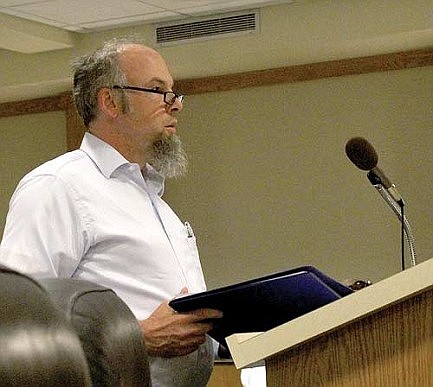
Bill Liebert of Liebert Architectural Design in Rhinelander has been vocal during previous public hearings on the shoreline zoning code and Wednesday's hearing was no different.
Before zoning director Karl Jennrich could begin his review and recitation of the latest changes, Liebert challenged the validity of the public hearing.
"We had three public hearings a few of months ago and that never went forward," Liebert said. "So we're on public hearing again, so I don't know really why we're on that again. I don't have any idea what I'm comparing the strikeouts and underlines against. Is it the ordinance of July 15, 2016, which is the current version available to the public, or is it the public hearing documents from a few months ago?"
Jennrich attempted to provide clarity by explaining that the committee opted to completely repeal and replace the old ordinance after changes were made following the previous public hearings.
"Because the other ordinance didn't move forward - in my opinion, not legal opinion - it's dead in the water," Jennrich said. "So what we're doing, for the most part, 95 percent of the same language from the last time, plus the add-ons the committee wanted to bring forward. The way we brought Chapter 9 forward before was the same way. We did not do strikethrough or underline, we did a repeal and recreate. So this one is still a repeal and recreate."
The committee then requested confirmation from corporation counsel Brian Desmond that the public hearing was not being held in violation of the state's open meetings law.
The county's top lawyer gave the go-ahead to move forward.
"I think it's a repeal and recreate," Desmond said. "Anytime you guys make changes of what you had at the previous public hearing, you have to have another public hearing and that's part of the law. That's required. I think you gave notice that you were having a public hearing because you made changes from those three in March. You've made changes so I think you are required to have a public hearing, by law, on this matter and I think the manner it's been done, as Karl stated, is a repeal and recreate. So you're taking all of what exists of Chapter 9, and essentially setting it on the ground and lighting it on fire and replacing it with this language."
At that point, the committee opted to continue with the public hearing, allowing the approximately 29 people in attendance to speak, which gave Liebert another opportunity to take to the podium.
"When I read through this document, I don't understand why there's a strikethrough and why there's an underline," Liebert said. "I'm agitated because there hasn't been a history in Oneida County to extend the public hearing beyond this verbal interaction. I'm in a very tight pinch, in my general nature, to be respectful to people here that are waiting to speak and for yourselves to be able to move forward on this. It's impossible to prepare for this public hearing because there's nothing to weigh it against."
Liebert went on to question why Jennrich referenced the March public hearings during his explanation of the changes if the ordinance being discussed is a complete repeal and recreate.
"My livelihood is on the line in some respects in coming to these meetings to make sure I have my bases covered," Liebert said. "So I know what to say and how to say it to be helpful, but if you're holding this public hearing and you're telling me it's a complete swipe clean, then you're not paying any attention to March, [Jennrich] shouldn't have referenced it. It should be in your agenda, to be helpful to the public because I think that's what you've been tagged with in legal situations is that you're not clear in your agendas."
Liebert also questioned whether the committee had voted to erase the language from the previous public hearings since the last public hearing was held.
After the committee closed the public comment portion of the meeting, chairman Scott Holewinski asked Desmond if they could extend the period for people to submit written comments, something that Liebert requested during both of his trips to the podium.
Desmond answered in the affirmative.
In the end, the committee voted to allow citizens to submit written comments until the July 19 meeting, at which time it is expected to vote on the changes.
Nick Sabato may be reached at [email protected] or via Twitter @SabatoNick.

Comments:
You must login to comment.