June 14, 2017 at 4:03 p.m.
Panel discusses prescription drug abuse problem in Vilas County
Kovar encourages leadership to take action
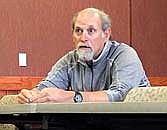
Panel discusses prescription drug abuse problem in Vilas County
The county has seen an uptick in awareness and treatment efforts for drug addiction as the abuse of opiates continues to grow.
"I hear too often people feel like they can't do anything but there's a lot people can do," Kovar said. "Especially people that are in positions of leadership. A lot of the policies and the way we decide to deal with some of the issues of addiction really require strong leadership, an educated leadership."
For nine years, Kovar worked at the Marshfield Clinic Center for Community Outreach and saw a continued decrease in funding for prevention efforts. He stressed the need for individuals in leadership roles to advocate for prevention funds.
"Pretty much all of the money for prevention has disappeared, and I think we're paying the price," Kovar said. "Something leadership can really do is advocate for prevention dollars."
According to Kovar, the state Department of Instruction's Alcohol and Other Drug Abuse Committee used to give $7 million to nearly 450 school districts in the state for drug prevention efforts.
Kovar said Vilas County also used to receive a drug-free community grant through the Substance Abuse Mental Health Administration, a federal agency, for prevention efforts in the schools.
"For at least 10 years, we had that [grant] here in Vilas County," Kovar said. "We surveyed sixth, seventh and eighth graders and they were already using in sixth, seventh and eighth grade. We need to really target young people if we have any hope of preventing them from going down that road."
Kovar said one of the reasons for the drug problem in Vilas County is the amount of opiates being prescribed to patients. Committee member Holly Tomlanovich relayed a personal story involving a family member's treatment for a medical condition and said the choice of prescription was left to the patient.
"The treatment of choice by the physician was very simply, 'What pill would you like?'" Tomlanovich said.
"And that's what our insurance companies support," Kovar said. "And endlessly. As much as you want. That's why it's such a hard thing to fight. The only way I see it turning around is when grassroots local people take control. There is no control anywhere else, except what we can do here in our own community."
Committee member Carolyn Ritter also relayed a personal story, this one about a television program on opiate use she recently saw.
"It talked about the problem doctors have when oftentimes they are caught in the middle of what the patient wants and what they feel is best," Ritter said.
Within the medical community is a patient's bill of rights, one aspect of which is a patient's right to receive treatment for pain.
"This particular doctor did not prescribe pain medication because he did not believe it was in the patient's best interest," Ritter said. "He was charged with the neglect of his patient and went to court for failure to provide proper care because he would not prescribe opiates."
Ritter said that event sent a specific message to the medical community: treat pain with prescriptions.
"'I have to treat pain, what do I have to treat pain with? Medications,'" Ritter said. "It's real easy to say, 'Doctors say what pill do you want?' But our doctors are in an awkward situation when they have this patient's bill of rights they have to uphold and if they don't, everything is on the line. So when you said it's a complicated issue, it's a very complicated issue."
Kovar said he would like to see the state's county boards band together and create a platform on the issue of prevention. He particularly wants to see the boards put pressure on Security Health to look at making non-pharmacological treatment options more affordable.
"But right now, nobody's saying anything," Kovar said. "We talk about it amongst ourselves. Right now, once people are addicted, they are now the most expensive people we have to deal with in our community. We have to be proactive if we want to make a difference."
Jessica Leighty may be reached via email at [email protected].

Comments:
You must login to comment.