August 25, 2017 at 3:54 p.m.
School district redesigning approach to teaching
Professional development changes have fostered a team approach
School district redesigning approach to teaching
Education is equal parts science and art form, and good teachers are quick to adopt what is referred to in the field as "best practices" to ensure that all students in their classrooms not only learn the material but excel at learning.
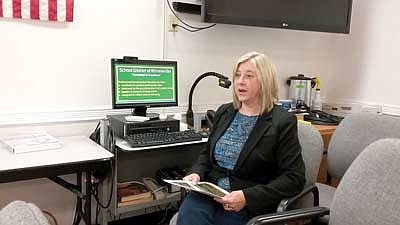
The School District of Rhinelander implemented a new approach to teaching in 2013 that ensures all teachers adopt these best practices in a unified way that also fosters a team approach to education. This was done through the ongoing process of professional development, for which the district sets aside several days every term. Instead of implementing major changes immediately, the district opted to make the changes over several years. This has allowed for lasting change to take place in the long run, the district's director of instruction Teri Maney told the instruction and accountability committee Aug 14.
Maney began her presentation by explaining that while committee members may be familiar with a lot of the concepts behind the change in professional development in the district they may not realize how much it has been building upon itself over the last three years. She said her department has been working closely with director of special education/pupil services Maggie Peterson in making the changes.
"If we've done one thing, I hope that we have really worked cohesively between our two departments to make sure that what we're doing for professional development not only makes sense for a smaller subgroup but for the whole district as well," Maney said, adding that Peterson and herself have been preaching the benefits of the changes for so long that many people have heard it over a dozen times.
She said the repetition has been good for those who have needed the message repeated to fully grasp the concept.
"The reason is so that the reason we are doing professional development is clear to all," she said.
At the end of the 2016-17 school year, the teaching staff and administrators got together to "capture what we had did the entire year," she explained. The briefing she gave the committee was equal parts a look back at how far the district has come in the last three years and a lookahead to where it is heading in the 2017-18 school year.
She explained that some students are initially unhappy with the job fields vocational testing points them toward, worrying that they will end up performing a mundane job.
"When I was in the classroom I always said to kids 'Whatever you want to be, you can be and you have that right to be that and if you don't want to be a rocket scientist, that's OK, you can be the best at whatever you chose to be,'" she said, adding that she told students that auto mechanics and the like are just as important as rocket scientists.
"We've kind of been framing our professional development in the same framework," Maney said. "It used to be in the past, initiatives came and went, and we have gotten away from that. Maggie and I decided a few years ago that we were really going to make an in-depth analysis as to where we are in certain areas, what we're going to do with that information and then - and I used the word prescription - it's like a prescription, we're prescribing what we need to do. We're always talking about the kids getting results, but we also have to make sure that we're preparing our adults to adequately serve the kids. So we have come up with a pretty definitive, this is our vision and this is where we need to go."
Maney then explained that she consciously shaped an atmosphere that creates student growth through learning experiences while "promoting choice, engagement and clear purpose."
"Three very simple ideas, three very hard little ideas to excel at when you're set in your way or vision and you believe that your content is best served in this manner of representation. Thinking about promoting choice is not always easy," she said. "So that is where we come in, we have to give our staff the skill set to understand that there are many choices that can be offered to students. All equally credible, even though they're not necessarily all pencil and paper kinds of assessments. They may be performance-based, they may be creating a product, but what we need to agree on is that students do want choice as adults want choice. They have to be engaged in their learning for successful learning to happen, and there has to be a clear purpose."
She then compared it to looking at a syllabus for a college class at the start of a semester and wondering what is supposed to be learned over the course of the term. It's no different for the district students, she said, adding that teachers have been taught that when they are working on their daily lesson plans they should clearly state the learning target so students can answer the question of "what did we learn today?"
Maney also said teachers are trying to foster a problem-solving process that takes advantage of the idea that often there is more than one way to arrive at the right answer.
"Because technology is changing, we want our learners to be very quick on their feet," she said.
She also noted that it is often said that there isn't a lot of cultural diversity in the Rhinelander area that would have an impact on learning. Then she explained why she disagrees with that assessment.
"Maybe it is not obvious, maybe we don't have a huge ethnic diversity, but there is a lot of diversity in a lot of ways," Maney said. "Whether it's poverty, whether it's family makeup, whether it's religious beliefs, you can fill in the blank with a lot. But you've got start realizing again that we have to be responsive to what they need to learn, rather than what we're comfortable with teaching."
Taking all of these factors into consideration led to some "pretty tough conversations over the past few years," she added.
Since the change in professional development planning began, it has been correlated to student achievement data, dedicated to literacy instruction in all content areas, applied to the purpose of assessment and designed to reflect cultural relevancy, she explained, adding that she is anxious for the state assessment exam results to be released in early October.
"For all the hard work that we that we've been doing, I get a little bit antsy because we should be seeing better results on the state tests," Maney said. "But I understand that the correlation between what we're doing and the state tests don't necessarily fall in line, I'd like to throw that out there, too."
Committee chair Judy Conlin noted that where once the state exams were the only unit of measure that carried the most weight, this isn't the case anymore. Maney agreed and noted that she can foresee a time in the near future where the state will ask what measures of student achievement the district uses and the reply will be six to eight distinct things.
Literacy instruction in all content areas was one of the first changes the district made, and Maney said there was a lot of resistance at first from teachers.
"We have said we're all going to do it, we're really going to get this on the forefront and thanks to our (literacy) coaches and good leadership from our principals, our Title I staff, our English staff and others who were willing to just jump in, we've clearly gotten that across the content areas now," she said. "To the point where, yes, we're seeing the literacy instruction come into consideration in your tech areas, into your art areas and into areas where you would think why are we doing that? But we have to realize that literacy has to come in everything."
The purpose of tying professional development to student assessments is primarily to let the teachers know what the students are not learning so they can adjust their teaching methods, she added.
Starting in 2013 when the change in direction started, Maney said it quickly became clear that the process would involve rolling out components over time.
"There was the persistent belief that we don't have enough money, we don't have enough resources, we don't have enough staff, we don't get our share. All of that is true, however, we can't live in the excuses," she said, adding that with the support of the community in the form of referendums, and the hard work of the teaching staff, the excuses soon fell by the wayside.
"When I reflect on what we have accomplished in a short time since Kelli (Jacobi) has been in the position of superintendent, and this team has been working to support education, we've done a lot in a very short time," she said. "To the point where we have other districts asking us how did you guys do that?"
She said the first step was building the infrastructure or groundwork for the rest of the program.
"We had to have a consistent plan on how we handled behavior, how we manage the flow of the school day," Maney said.
The next step was the implementation of common core state standards in math, English and language arts.
"Man, was that scary," she admitted. "I lost a lot of nights sleep over that, but now it's like, yeah, that's what we do."
The next piece, implemented between 2013 and 2015, was the integration of the strategic instruction model (SIM). It was a smaller piece that ended up being an important piece of the foundation for all that would follow, she explained, noting that it prompted a huge shift in how teachers prepare to teach each day.
"We have to be planning our lessons and our instruction for the benefit of the kids understanding, rather than what we want to present," she said. "That was a tremendous mindshift for our school district. It was a lot of growing pains but now it is interesting."
The last piece was educator effectiveness, a Wisconsin Department of Instruction mandated requirement that Maney said the district seized on and has actually gone beyond.
"We made it much more than you have to jump through this hoop," she said. "It's, no, we have to keep growing as a district educator to make sure that our kids get what they need."
In the 2015-16 school year, Maney said district administrators and teachers learned the research behind what they were trying to do and "committed to the why." This included the visible learning study completed by John Hattie, Mike Mattos' 10 team and Working On the Work (WOW)-four essential questions.
"The teamwork was resulting in us becoming much more than individual departments or buildings, it was becoming much more widespread," Maney said, adding that teachers were asked to shift their thinking from the negatives of the family environment that might put students at a disadvantage to ways to overcome those perceived disadvantages.
"The teacher believed in the child," she said. "If the child believes that the teacher believes in them, it's a 1.6 to 1.7 effect rate that they will make more than a year's growth," Maney said. "It's almost two to three years growth if they internally believe that the teacher believes in them."
A big change during the 2015-16 school year was common planning which allow teachers to prepare common lessons so there is uniformity in all classrooms of the same grade, she explained. This collaboration was being done not only before or after school, but also during the school day. If a teacher has some free time during the day, especially at the elementary level, they are expected to help other teachers teach reading. This is important for students who need a little extra help.
"We want everyone involved in the teaching of kids," she said. "Everybody's content area is important."
The biggest change came in getting the adults to recognize what hinders learning and growth amongst themselves and what practices support adult learning, because these same things apply to the students in the classroom.
"These are hard conversations to have, but when we all believe that it is for what is best for our kids, everybody supports that," she said, adding that by the time this step was reached the teaching staff was receiving the information "openly" and it was "a great professional dialogue."
During the 2016-17 school year, the district started concentrating on special education as it applies to all teachers. This included teachers attending autism spectrum disorder courses taught by Glennis Benson, PhD. In addition, the district implemented reading drives achievement, multi-level system of support and refined its universal design for learning.
According to Maney, a side effect of the focus on training teachers to teach special needs students is they learned techniques that are beneficial in teaching all students.
The district also conducted a schoolwide implementation review during the last school year.
"That is where you say if you literally lift the roof off the building, is every teacher doing this, is every student able to learn because of this? If you can't say that everybody is, then you can't say you're in full compliance and you have to say what do we have to do to make sure all students can learn," Maney said. "This is a pleasure and kind of a painful at the same time because you feel that you're almost there. But if you're not completely there, you're missing some kids and we're not willing to let that happen."
In the second part of this series, Maney explains the district's professional development plans for the upcoming 2017-18 school year.
Jamie Taylor may be reached via email at [email protected].

Comments:
You must login to comment.