August 2, 2017 at 4:12 p.m.
Menard Inc. files lawsuit against city over 2016 property assessment
Seeks to use 'Dark Store' theory to get over $51K refund
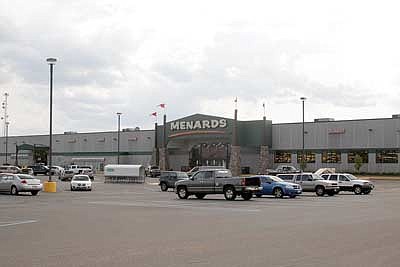
Menard Inc. files lawsuit against city over 2016 property assessment
That trend has reached Rhinelander as Eau Claire-based Menard, Inc. filed a civil suit July 26 challenging the company's property tax bill for 2016.
According to the company's complaint, the 2016 Total Assessed Value (EFMV) of its Stevens Street property was set by the city assessor at $8,400,000. The company charges in their filing that the fair market value of the property, located at 2221 N. Stevens Street, was no higher than $6,131,581.
The document states that Menard, Inc. filed an objection to the 2016 assessment of the property with the city's board of review, which issued a notice on Sept. 19, 2016 affirming the estimated fair market value the assessor set. On Jan. 17, the company filed a claim for excessive assessment, which it said the city had not responded to as of the date the suit was filed.
Based on the applicable assessment ratio and the tax rate of $22.84826 per $1,000 of assessed value, the company claims that the correct amount of property tax on the Rhinelander store for 2016 should be no more than $140,095.58. Because of the over-assessment, Menard, Inc. claims it overpaid its property taxes for 2016 by $51,829.80.
Under the "Dark Store" argument, the operating business within a building should not factor into the assessment of the building; the assessment that decides a store's property taxes should be determined by the value of recent sales of comparable, vacant properties.
In the suit, Menard asks Oneida County Circuit Court judge Michael Bloom to make the following findings and award the following relief:
• The total fair market value of the property as of Jan. 1, 2016 was no higher than $6,131,581.
• A refund of 2016 tax in the amount of 51,829.80, or such greater amount as may be determined, plus statutory interest.
• A refund of all litigation costs, to include reasonable attorney's fees.
• Any other relief that Bloom deems appropriate.
According to the Notice of Board of Review Determination for the 2016 taxes attached to the filing, the city claims the property the store is on is worth $2,258,900 and that a total of $6,141,100 in improvements have been made in the construction of the store.
The city has 20 days to file an answer to the lawsuit.
Rhinelander is not alone in being sued by Menard, Inc. According to online court records, in 2016 alone the company filed suit against 14 different municipalities, with some facing multiple legal challenges from Menard.
Since the 2008 case, several bills have been introduced in Madison to close the loophole the ruling created, however none have been successful. However, as big box stores continue to win in court, costing local villages, towns and cities property tax revenue, more municipalities have started lobbying for legislative relief, and a new bill was unveiled in May that has not gone to the floor of either house as of yet. The bill, LRB 0372, clarifies for property tax purposes, real property includes any leases, rights and privileges pertaining to the property. The bill would codify the common practice in assessment law that real property be assessed at its highest and best use.
Rhinelander city attorney Carrie Miljevich said Tuesday afternoon she had not yet seen the filing but had heard about it.
"It is my recommendation that we discuss how to proceed in closed session of next week's finance (wage and salary committee) meeting, if not the next City Council," she said.
Jamie Taylor may be reached via email at [email protected].

Comments:
You must login to comment.